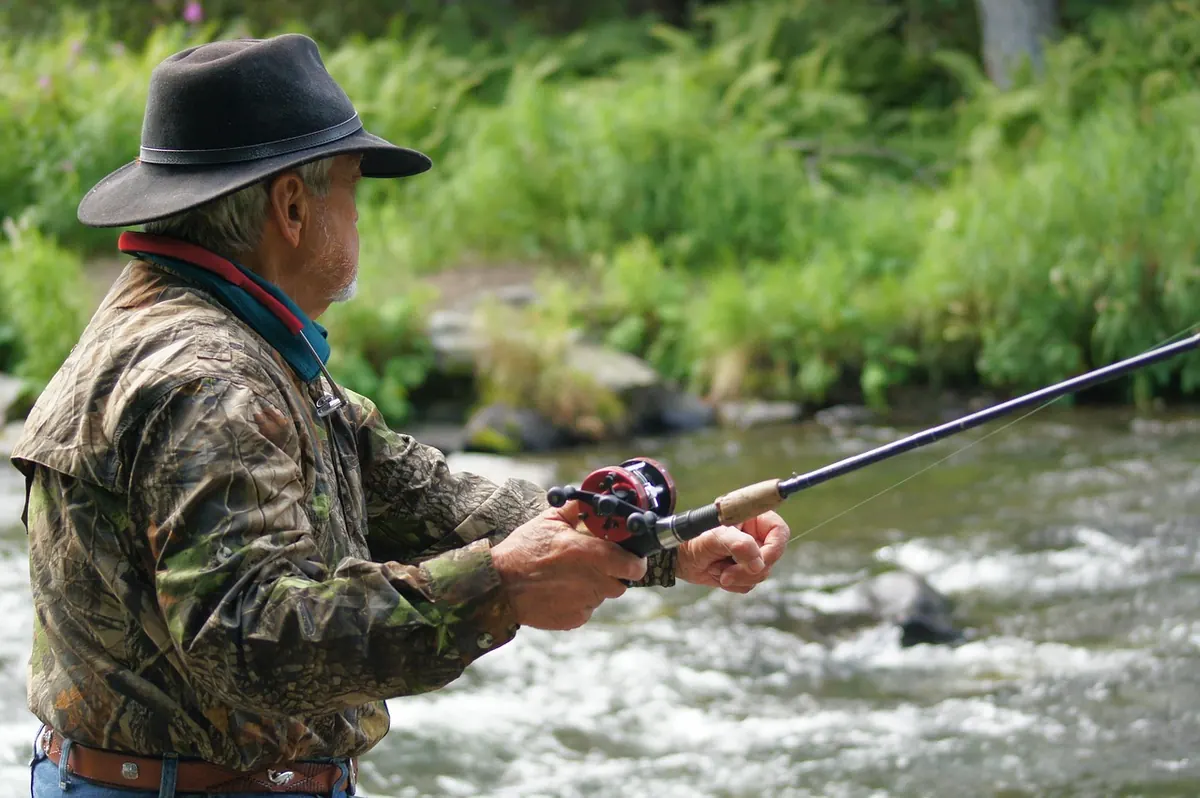
Most blanks on the River Avon are not caused by bad luck or by fish that have stopped feeding. They come from a handful of small, repeatable errors: a knot tied in a hurry, boots thudding along a gravel bank, a float set two feet too shallow. Fix those and the same swim that felt dead in the morning can produce fish after lunch.
The Avon is a river of contrasts. In its chalk-fed reaches it runs clear and steady, and it is easy to misread. Further downstream it is deeper, carries a little colour, and hides fish in slacks and creases that are not obvious from the bank. The anglers who catch consistently are rarely doing anything clever. They are simply not making the mistakes everyone else makes.
Knots and Terminal Tackle
There is no point perfecting a cast if the knot holding your hook is the weak point. Most fish lost on the Avon are not broken off by a snag or a spectacular surge. They are lost because a knot was tied dry and never seated properly.
A few habits pay off:
- Wet the knot before you pull it tight. Line weakened by dry friction fails at exactly the wrong moment.
- Seat it with a slow, steady pull, then look at it. If the coils have crossed or the knot sits unevenly, cut it off and start again.
- Test the hook point on a thumbnail after every fish, snag or rocky drift. If it slides instead of catching, change it.
- Re-tie the hooklength after every decent fish and after anything that put a real bend in the rod. Abrasion is invisible until it matters.
A fresh hooklength will land more fish than a tired heavier one. Carry the material and use it.
The Noisy Approach
Fish feel the bank before they see you. Shallow gravel glides transmit vibration beautifully, and a pair of boots crunching along the edge will clear a swim twenty yards before you arrive.
Approach from downstream where the banks allow it. River fish generally face upstream, so coming from behind them puts you outside their window of vision. Keep low, below the top of the bank if you can, and avoid standing against the skyline. Walk on grass rather than gravel. Do not hammer bank sticks in with a rock, do not drop the box lid, and never wade into the swim you are about to fish just to check the depth. Set up a few yards back and let things settle for ten or fifteen minutes before the first cast. It feels like wasted time. It is not.
Fishing the Wrong Depth
This is the quietest mistake in the book, because everything looks right. The float trots beautifully, the feeder lands where you want it, and nothing happens.
Start by plumbing properly. A plummet on the hook before you bait up takes two minutes and tells you the slope of the bed, where the drop-off sits and whether you are over gravel or silt. Then fish just off the bottom for most species, or hard on it when fish are grubbing.
Small adjustments, big difference
A few inches matter. Sharp dips with no proper bites usually mean you are too shallow and the fish are nudging the shot. A float that drags, buries or travels unnaturally means you are too deep. Move in steps of two or three inches and watch what changes.
The same applies with a feeder. A long hooklength over soft bottom buries the bait. Shorten it, or fish a lighter feeder, and the bites often arrive within minutes.
Feeding the Wrong Place
On a river, your loosefeed does not stay where you put it. Cast a handful of maggots straight out in front of you and most will be twenty yards downstream inside a couple of minutes. Fish follow that trail, and if your hookbait is not in it, you are fishing an empty lane.
Feed slightly upstream of your hookbait, a yard or two rather than more, so the bait arrives as fish are moving up over it. Watch the surface: small dimples upstream of the float tell you the feed is doing its job.
Do not overfeed early. On a cold Avon, a fistful of groundbait can kill a swim as easily as it can make one. Start with small, regular handfuls and let the bites tell you whether to increase.
Walking Before You Have Given the Swim a Chance
Twenty minutes is not enough to judge a swim. The Avon often takes half an hour to settle after your arrival, and longer in winter, when fish group tightly and are slow to move onto feed.
Give a swim a proper session, typically an hour, before you walk. Change something first: the depth, the bait, the distance, the presentation. Then, if it is still silent, move and mean it. A mile of river fished properly beats three miles walked. Travel light so moving is quick — rod, net, a small bag of essentials and a pocket of bait.
Rushing the Fight and Handling Fish Poorly
The last ten seconds of a fight separate careful anglers from careless ones. Bullying a fish on light line is the obvious error, but the more common one is the opposite: playing a fish until it is exhausted, then handling it with dry hands on a hard bank.
Use a net. Wet your hands if you must handle a fish, support its weight, and keep it out of the air for as little time as possible. On gravel banks, an unhooking mat earns its place. Return fish head-first into the flow and hold them upright until they kick away; a fish that drifts off on its side has not recovered.
Rules on hooks, keepnets and open seasons vary between stretches, clubs and the water authority that manages them. Check the rules for the water you are fishing and follow them.
Ignoring the Conditions
Fish feed when they feel safe, not when it suits your diary. On the Avon that usually means the first and last hours of light, overcast days, and a touch of colour in the water after rain. Bright, still summer afternoons are lovely for sitting on the bank and hard for catching.
Watch the river, not just the float. A slight lift in level and a hint of colour often switches fish on. A clear, low, cold river in winter is a different proposition: fish sit in the deeper, slower water, bites are delicate, and scaling down matters far more than covering water. If the river is rising, do not spend the session in the same swim — fish the slacks and the inside of bends where the current has somewhere to slow down.
A Short Checklist Before Your Next Cast
- Check the knot, the hook point and the hooklength. Replace anything doubtful.
- Approach quietly and from downstream, staying low and off the skyline.
- Plummet the depth before you bait up.
- Feed a yard or two upstream of where your hookbait lands.
- Give each swim an hour, and change something before you move on.
- Net every fish and return it properly.
None of this is complicated and none of it needs expensive tackle. It needs the discipline to slow down at the moments when it is tempting to rush — the knot you cannot be bothered to retie, the bank you crunch along because the path is easier, the depth you assume rather than measure.
Photo: BarbaraJackson / Pixabay